
What Is Refinancing and How Does It Work?
Summary
Refinancing replaces an old loan with a new one — usually for better terms. Learn how refinancing works, when it makes sense and what to consider before applying.
In this article:
Sometimes terms that made sense for your needs when you first got a loan no longer work for you. You might have trouble covering high monthly payments. You might qualify for a more favorable interest rate now. Or perhaps you just want to pay off your loan as soon as possible. Refinancing a loan may lower your costs, make repayments easier to manage or help you become debt-free faster.
Once you understand how refinancing works, you can weigh the advantages and risks to determine whether it’s the right strategy for your debt.
What does it mean to refinance a loan?
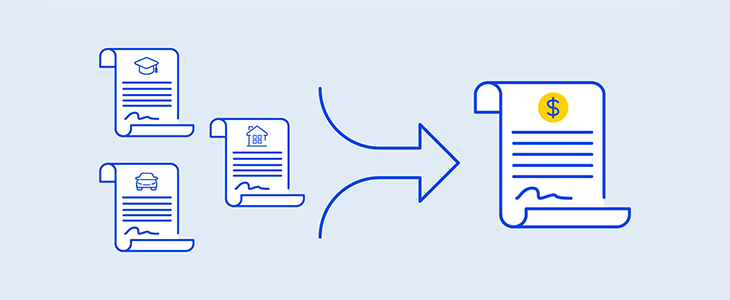
Refinancing a loan means getting a new loan to pay off the balance of an existing loan.1 Some lenders, such as OneMain, use the term “loan renewal” to describe this process. When you are looking into how to refinance a personal loan and you come across information mentioning loan renewal, know that these terms mean the same thing.
You may refinance many different types of loans including:
- Personal loans
- Auto loans
- Student loans
- Mortgages
Typically people refinance to replace their loan terms with new terms that work better for their financial circumstances. You might refinance a loan to get a lower interest rate, reduce your monthly payment or change the length of your repayment period.2
When does refinancing make sense?
Refinancing may make sense in a few different circumstances.
When your credit score has improved
If your credit score has improved since you took out the original loan, you may qualify for a better interest rate. In this case, it may make sense to refinance your loan.
When interest rates go down
The U.S. Federal Reserve (the Fed) sets interest rates, which affect lenders, banks and credit unions. In turn the lenders use that rate as a basis for determining how much interest they will charge their borrowers. If the Fed has lowered interest rates and your credit has stayed stable or improved, it may be a good opportunity to explore whether you can refinance your debt with a new loan that has a lower interest rate. Just remember that taking out a new loan comes with additional fees that may offset your interest savings.
When you want to switch interest rates
Some loans, like adjustable-rate mortgages, have a variable interest rate. A variable interest rate may go up or down based on the rates the Fed sets and the changes in the market. If you want more predictable payments, you may want to refinance to a loan with a fixed interest rate (an interest rate that doesn’t change over time).
When you want to pay down debt faster
You may take out a loan with a shorter term to repay your debt faster and potentially pay less interest if the interest rate is lower than your previous loan’s interest rate. For example, a short-term auto loan lets you have full ownership over your car sooner if you make on-time payments over the course of your loan.
Remember a shorter loan term generally means higher monthly payments. Before you refinance to shorten your term, make sure you have room in your budget for a higher monthly payment.
When you want to lower your monthly payments
If you’re straining your finances to cover your loan payments each month, extending the loan term may relieve some of the pressure. Replacing a three-year loan with a five-year loan, for instance, may bring down your monthly payments. However, the total cost of the loan generally increases when you extend the loan term, since you'll pay more in interest over that longer time period.
A longer loan term may be a great tool for avoiding missed payments or balancing your monthly budget. Just remember that you’ll have higher long-term costs, so be sure the new term works with your financial goals.
When you want extra money
If you need extra money, a cash-out refinance may help. Cash-out refinancing replaces your current mortgage or car loan with a loan that’s larger than your remaining balance, and you receive the difference as a lump sum. You’re free to use the additional funds for emergencies, home renovations or other expenses. The cash-out you receive depends on your equity, which is the difference between what you still owe and the value of your home or car.3 You’ll need to put up your car or home as collateral (something of value you will use to back the loan). Be aware that if you don’t repay according to the terms of your loan agreement, the lender has a right to take the collateral to recoup what you owe.
How does the refinancing process work?
The refinancing process may vary depending on the type of loan you’re looking to refinance, but typically you’ll follow some simple steps. Check with a financial professional for guidance if you’re not sure of the actions to take for your specific loan.
1. Review current loan documents
Review your current loan agreement documents, monthly payment, budget and goals to determine what you need from a refinance, such as a lower interest rate or a longer term.
2. Check your credit report and score
Before you begin the application process for a new loan, consider checking your credit report and score. If your credit score is lower than you’d like it to be, consider working on improving it — by paying your bills on time and reducing the amount of available credit you’re using — before applying for a new loan. OneMain customers can access their VantageScore® credit scores for free on the online account summary page or through the mobile app. Everyone is entitled to a free weekly credit report from each of the three major credit bureaus (Equifax, TransUnion and Experian).
3. Compare rates
Compare rates and loan offerings from multiple lenders to find the right fit. You may want to do this by checking for prequalified offers to get an idea of the kind of terms you might receive. Checking won’t affect your credit score, and the process is typically quick — at OneMain, it usually takes five minutes or less. You may also want to discuss your prequalified offers with your current lender. They may be willing to adjust the rate or terms on your current loan to fit your needs. If your current lender offers to change your loan, you may want to compare the new terms to your prequalified refinancing offers.4
4. Complete a loan application
If you find an offer that works for you, complete a loan application from a lender. The lender will review your application and conduct a hard credit check, which may temporarily affect your credit score.
5. Review and sign loan documents
If your application is approved, review the lender’s offer carefully and accept it if it’s a good fit for your needs. Before you close your loan, keep in mind that your lender may request some documentation, such as proof of identity, proof of residence and proof of income. Once you sign the loan documents, your lender will then pay off your existing loan with your new loan. In the case of a cash-out refinance, you’ll receive the difference between your existing loan’s payoff amount and the new loan amount as a lump sum.
6. Start repaying the new loan
Once you’ve confirmed that the new lender has paid off the old loan, you will make all loan payments to your new lender. (Don’t stop making payments to your old lender until you know the loan has been paid off.) Making consistent, on-time payments will help you build your credit while paying down your new loan.
Refinancing fees to consider
Refinancing could possibly save you money on interest or help lower your monthly payments, but like any loan, it may come with costs of its own. Some refinancing fees may include:
- Origination fee: An origination fee is a one-time fee for processing an application and setting up a loan. Many types of loans are subject to origination fees including mortgages, personal loans and auto loans. Mortgage origination fees are sometimes negotiable.5
- Prepayment penalty: Some lenders may charge you a prepayment penalty for paying off your loan before the term ends, especially if you’re refinancing a mortgage.6 Note that some lenders, such as OneMain, don’t charge prepayment penalties.
- Closing costs: You may need to pay closing costs, such as an appraisal fee and a title fee, if you’re refinancing a mortgage. Depending on the terms of the refinance, you’ll either pay closing costs at signing or they’ll be factored into your new loan. Closing costs are typically between 2% and 6% of the new loan amount.7
How to decide if refinancing is right for you
The aim of refinancing a loan is to leave you in a better financial position, whether that means getting a better interest rate, lowering your monthly payment or paying off your debt faster. Ask yourself the following questions to determine whether refinancing your loan is the right move:
- Do the savings outweigh the costs? If you want to save money on your loan in the long term, make sure fees won’t cost you more than you’d save in interest charges over the life of the loan.
- Is the cost of refinancing affordable right now? You should also consider your current financial situation. Mortgage refinancing, for instance, may cost thousands of dollars upfront. Make sure refinancing works for your budget.
- Will I qualify for better terms? To qualify for a lower interest rate or more favorable terms when you refinance, you may need a stronger credit score or lower debt-to-income ratio than you had when you applied for your original loan.
- How long do I plan to keep this loan? Refinancing a mortgage or auto loan may not be worthwhile if you’re planning to sell your home or car in the next couple of years. And if the term of your existing loan ends soon, it may not make sense to refinance.
Refinancing is a major decision with consequences that may shape your financial life for years. Before you take the leap, compare your offers carefully. Make sure you understand your loan terms, and don’t hesitate to ask the lender questions.
Rethink your loan, your way
Refinancing is one way to realign your debt with your priorities, whether you want to ease your financial stress, free up cash in your budget, streamline your bills, save money or reach milestones faster.
If refinancing seems like the right fit for your goals, consider options from OneMain, such as a personal loan, auto refinancing or cash-out auto refinancing.
Sources
1.,2.: https://www.investopedia.com/terms/r/refinance.asp#toc-types-of-refinancing
3. https://www.experian.com/blogs/ask-experian/what-is-a-cash-out-refinance/
4. https://www.experian.com/blogs/ask-experian/what-is-refinancing/
5. https://www.investopedia.com/terms/o/origination-fee.asp
6. https://www.consumerfinance.gov/ask-cfpb/what-is-a-prepayment-penalty-en-1957/
7. https://www.bankrate.com/mortgages/how-much-it-costs-to-refinance/
This article is for general education and informational purposes, without any express or implied warranty of any kind, including warranties of accuracy, completeness, or fitness for any purpose and is not intended to be and does not constitute financial, legal, tax, or any other advice. Parties (other than sponsored partners of OneMain Financial (OMF)) referenced in the article are not sponsors of, do not endorse, and are not otherwise affiliated with OMF.