
What is a balance transfer?
Summary
A balance transfer allows you to move debt from one credit card account to another, often at a lower interest rate. Learn how it works and when it might make sense.
In this article:
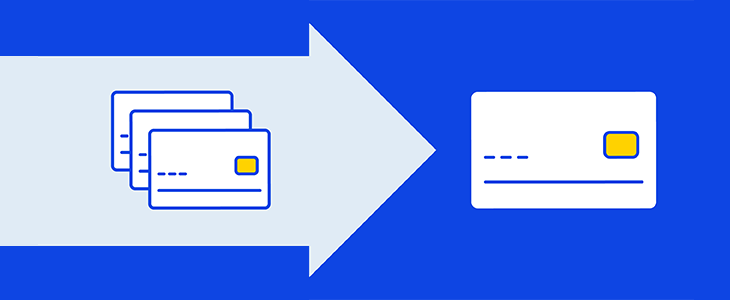
Juggling high-interest credit card debt could make it difficult to repay what you owe, but a balance transfer might offer you a clear path to take control of your finances. A balance transfer is a kind of debt consolidation that could let you combine multiple high-interest debts onto one credit card.
Some credit cards offer a low introductory or promotional annual percentage rate (APR) — the yearly cost of borrowing — when you transfer a balance. If you pay off the transferred balance before the offer period ends, this could help you save hundreds, if not thousands, of dollars in interest, depending on the size of the balance.1
Learn more about what a balance transfer is, how it works, and when it might be right for you.
What is a balance transfer?
A balance transfer is when you move your existing credit card debts to another new or existing card, often to take advantage of a low or 0% introductory or promotional APR offer for a set period. If you don’t pay off the transferred balance during the offer period, you’ll be charged the card’s regular non-promotional APR on the portion of the balance you haven’t paid. If you’re using a credit card with deferred interest, note that you may be charged interest on the entire balance transfer amount if you don’t pay it off by the end of the promotional period.2
Credit card debt is the most common kind of debt to transfer, but your card issuer may also allow you to consolidate other forms of debt, like auto, home equity or personal loans.3
How does a balance transfer work?
Understanding how a balance transfer works may help you know what to expect before you start the process. Let’s review how to complete a balance transfer below.
Use a credit card with a balance transfer offer
The first step is to use a credit card that lets you make a balance transfer to get the process started. You can choose to either use an existing credit card (if the card issuer allows balance transfers) or apply for a new one, although there are pros and cons to each.
Use an existing credit card
Ask your current credit card company whether they allow balance transfers. If so, you could avoid having a hard credit check like you would if you applied for a new card.
You’ll also want to consider how transferring debt to your current card could impact your credit utilization ratio, which is the percentage of total credit you’ve used compared to the total credit you have available. If the balance transfer pushes your balance closer to your card’s credit limit — the maximum amount of available credit you can access — your utilization may increase, which could negatively affect your credit score. On the other hand, if you have a low credit utilization ratio, moving the balance to an existing card may be less of a concern.
Another note to consider is that if you use your existing card for a balance transfer, the promotional APR may only apply to the transferred balance. The card’s non-promotional APR may still apply to your existing balance from previous spending, as well as new purchases.
Apply for a new credit card
Even if your current card issuer allows balance transfers, don’t be afraid to shop around. You can usually explore whether a credit card might offer a better rate without impacting your credit score by checking for prequalified offers.4
If you decide to transfer your high-interest debts to a new credit card, you’ll need to submit an application. Many card issuers allow you to apply online, but some may also accept applications in person or over the phone. Submitting an application will trigger a hard inquiry on your credit, which may temporarily impact your credit score.
Some card issuers consider your credit score, income, debts and other factors when setting your card terms, interest rate, and credit limit. Others assign the same limit to every borrower. In either case, your credit limit tells you how much of your existing debt you may be able to transfer.5
Initiate the balance transfer
Contact your card issuer to find out how to begin the balance transfer process.
Be prepared to provide your address, along with your previous account number and the amount you’d like to transfer.6 You may have a limited window of a few months to complete the balance transfer, depending on the terms of your card. Be aware of any deadlines so you can make sure you start the transfer in time.7 Depending on the card issuer, you may need to pay a balance transfer fee, often a flat fee or 3-5% of the amount you want to transfer.8 Sometimes the balance transfer fee is added to your new or existing balance.
Once the transfer initiates, either the card issuer will pay off your old balances directly, or you’ll receive the funds from them via direct deposit or a check to do it yourself.9 The balance transfer may take anywhere from three days to six weeks to complete.10
In the meantime, keep a watchful eye on any account you’re transferring a balance from, as well as the credit card account that you’re transferring old balances to. Until the transfer is complete, you’ll still need to keep making the minimum payment on your old balances to avoid potential late fees or credit damage due to missed payments.
Make payments
When the balance transfer is complete and you receive your first statement, it’s time to start making payments. Like with other types of debt, late payments can impact your credit score. Your credit card issuer may also charge late fees, cut your offer period short, or trigger a higher APR altogether.11 Paying your credit card bill on or before your due date could help you avoid charges to your account and keep delinquent payments from appearing on your credit report.12
To make the most of your low-APR offer, be sure to pay off the entire balance before the offer period ends. If you still have a balance after the offer expires, the card’s regular non-promotional APR and fees will apply on your remaining balance until it’s paid off. Depending on the APR after the promotional rate ends, the cost may exceed what you paid on your previous cards, which could add to your debt.
When does a balance transfer make sense?
Do any of these scenarios apply to you? If so, a balance transfer could fit your needs.
- You want to pay down your high-interest debt quickly due to expensive interest charges.
- You want to consolidate multiple monthly payments into a single, more manageable payment.
- You won’t need to use your card for purchases while paying down the balance, avoiding more debt.
- You have a realistic repayment plan in place to pay off the balance before the offer period ends.
- You can afford the potential balance transfer fee, and your total balance plus the transfer fee doesn’t go over your credit card limit.
Pros and cons of a balance transfer
Like other debt consolidation strategies, a balance transfer has advantages and disadvantages.
Pros
- Could help improve your credit score over time with responsible use: Paying the minimum or more than the minimum on time every month may help you maintain or build your credit score.
- May help lower your debt-to-income ratio (DTI): DTI is your total debt payments divided by your monthly income before taxes.13 A balance transfer could make it easier to lower your DTI faster with low or interest-free payments over a set period, but only if you actually pay down what you owe and keep new debt to a minimum.
- Can simplify debt repayment: If you transfer multiple balances to one credit card, you’ll have only one due date and payment to track each month rather than several.
Cons
- Interest charges can add up: When a card promotional balance transfer offer ends, the regular non-promotional APR kicks in. If you still have a balance on the card, those charges may be even higher than your previous card.
- Prequalification could be challenging: Many cards with low-APR offer periods are geared toward borrowers with a favorable credit history, so it may be more difficult to qualify if you have a lower credit score.14 Checking your credit score could help you see where you stand and give you clear directions, so that you can take steps to improve your creditworthiness before applying for a card with a balance transfer offer.
- Without a clear budget, it could be easy to take on more debt: After a balance transfer, it may be tempting to use your old cards but be aware that continuing to spend without a budget may keep you in a cycle of debt.
Tips for using a credit card balance transfer effectively
These tips could help you make the most out of your balance transfer:
- Read the fine print: Knowing the details of your terms and conditions can help you understand the interest and fees you might be charged, when the promotional period ends and how much you need to pay each month to ensure you pay off the balance before then.
- Pay more than the minimum: Paying more than your card minimum each month could help make sure you pay down the balance before the introductory or promotional offer ends.
- Avoid new charges that could complicate repayment: Adding new charges to your transferred balance could make it harder to pay down your original debt before the offer period ends.
What if a balance transfer isn’t right for you?
A balance transfer can be a smart short-term way to manage high-interest debt, but it’s not the only option available. Consider whether these alternatives might be a better fit for your situation.
- Apply for a debt consolidation loan: A debt consolidation loan combines multiple debts into a single loan with predictable monthly payments, a potentially lower interest rate and a set payoff date. Lenders like OneMain offer personal loans that can be used for debt consolidation to help you simplify your finances and free up your budget. At OneMain, your loan term could be as short as 24 months or as long as 60 months.
- Use a debt payoff strategy: If you feel comfortable continuing to make your monthly payments to each lender or creditor, you can use a debt payoff method, like the debt snowball or debt avalanche methods. The debt snowball focuses on paying off your smallest debts first, while the debt avalanche is designed to tackle debts with the highest interest rates first, all while still paying something, such as the minimum due for each debt every month.
- Negotiate with your creditors: It may feel intimidating to pick up the phone, but many creditors are open to working with you if you explain your circumstances. They may be willing to lower your interest rate or adjust your payment due date to help lighten the load.
Know your options for managing debt
While a balance transfer may be a great way to pay down high-interest debt, it’s a temporary solution, and it’s not the only option. A debt consolidation loan could be another solution that meets your needs. Shop around to find what works best for your long-term financial goals.
Sources
1 https://www.creditkarma.com/credit-cards/i/what-is-balance-transfer-apr
2 https://www.bankrate.com/credit-cards/balance-transfer/what-is-a-balance-transfer-fee/
3, 8 https://www.experian.com/blogs/ask-experian/should-i-get-a-balance-transfer-card-or-debt-consolidation-loan/
4 https://www.creditkarma.com/i/can-prequalification-hurt-credit-score
5, 6, 7 https://www.bankrate.com/credit-cards/balance-transfer/how-to-do-credit-card-balance-transfer/
9 https://www.nerdwallet.com/article/credit-cards/simple-steps-to-transfer-credit-card-balance
10 https://www.equifax.com/personal/education/credit-cards/articles/-/learn/transfer-credit-card-balance/
11 https://www.experian.com/blogs/ask-experian/balance-transfer-credit-card-mistakes-to-avoid/
12 https://www.experian.com/blogs/ask-experian/when-does-debt-become-delinquent/
13 https://www.consumerfinance.gov/ask-cfpb/what-is-a-debt-to-income-ratio-en-1791/
14 https://www.experian.com/blogs/ask-experian/how-do-0-apr-credit-cards-work/
This article is for general education and informational purposes, without any express or implied warranty of any kind, including warranties of accuracy, completeness, or fitness for any purpose and is not intended to be and does not constitute financial, legal, tax, or any other advice. Parties (other than sponsored partners of OneMain Financial (OMF)) referenced in the article are not sponsors of, do not endorse, and are not otherwise affiliated with OMF.